Websites for rural and agri-tech businesses: built to work on a poor signal
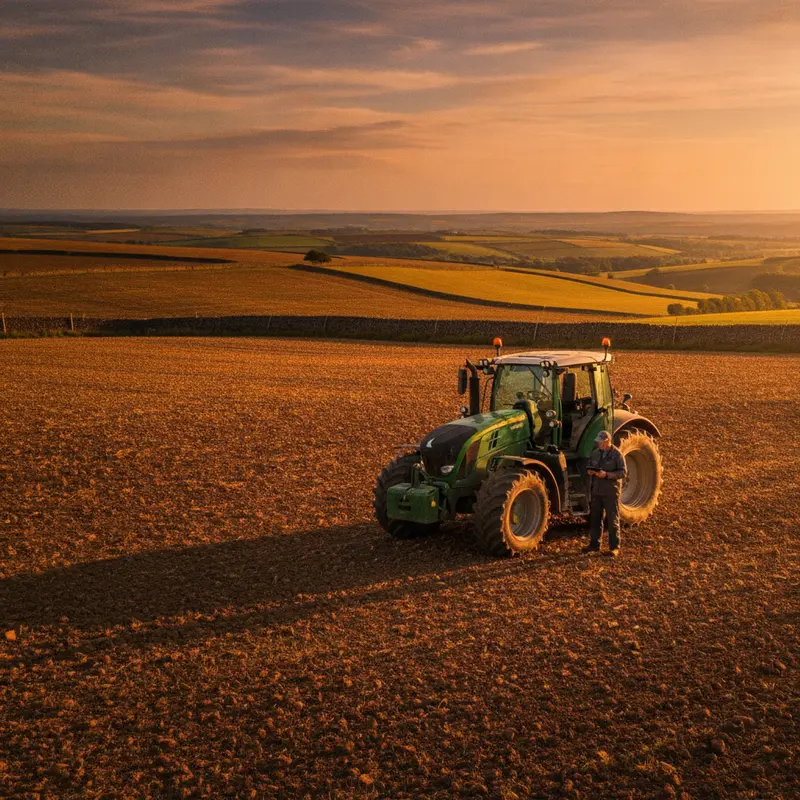
North Yorkshire is a large rural county, and the area around York is home to a lively agri-food and agri-tech sector. The York Biotech Campus at Sand Hutton hosts Fera Science and a mix of research and agri-food businesses, the region's mayor has named agri-tech, alongside industrial biotech, as a sector where the area could be world class, and across Ryedale, the Vale of York and the Wolds there are farm businesses, machinery dealers, agronomists, contractors and diversified enterprises of every kind.
Many of their customers have one thing in common: they read websites on a phone, often in a yard, a field or a farm office with an unreliable connection. That changes how a website should be built. This guide explains why speed and simplicity matter so much for rural businesses, and what to do about it.
Why weight matters
Every page on a website has a weight: the images, fonts, scripts and code that a phone has to download before it can show anything. On fast city broadband, a heavy page might load in a second or two. On a weak mobile signal, the same page can take far longer, or fail entirely. Visitors rarely wait.
Many modern websites are much heavier than they need to be. Large uncompressed photographs, autoplaying video, sliders, chat widgets, tracking scripts and page builders all add up. A farm shop's homepage does not need to be heavier than a short novel, but some are.
What a lightweight site looks like
- Compressed, correctly sized images in modern formats such as WebP, loaded only as people scroll to them.
- Few or no third-party scripts. Each one is a dependency that can slow or break the page.
- System or carefully chosen fonts, limited to the weights you actually use.
- Simple layouts that render quickly and do not jump around as they load.
- Static or cached pages served from a network close to the visitor.
The result is a site that appears almost instantly, even on a poor connection, and costs less to run.
Put the essentials first
On a slow connection, what loads first matters most. Put the information people most often need at the very top of the relevant pages: opening times for a farm shop, the phone-free contact route for a contractor, the product range and stock situation for a machinery dealer, directions for a wedding barn or campsite. Do not bury them under a large banner image.
Directions for the countryside
Postcodes in rural areas can cover a wide area, and satnavs sometimes send visitors down the wrong lane. If people visit you, give clear directions from the nearest main road or village, mention landmarks, and include a what3words address or a precise map pin if that helps. Say where to park and whether the track is suitable for cars, coaches or horseboxes.
Agri-tech companies have two audiences
Agri-tech firms often sell technology to farmers while also needing to convince investors, research partners and funders. That calls for a site that speaks plainly about practical benefits on the farm, with deeper technical and research pages for those who want them. Real photos from field trials and farms, with permission, are far more convincing than generic imagery.
Be honest about evidence. Farmers are understandably wary of overblown claims, and so are funders. Describe what trials showed in proportion, and link to published work where it exists.
Diversified farm businesses
Many farms now run several businesses at once: a shop, a café, holiday lets, glamping, an events barn, a farm park. Each has a different audience, but they share a location and a story. A single site with a clear section for each usually works better than separate sites, as long as navigation makes it obvious where to go. Booking systems for accommodation or events should be quick to use and work properly on a phone.
Seasonality
Rural businesses are often seasonal: pick-your-own, lambing events, Christmas trees, harvest work, shooting, holiday lets. Plan seasonal pages in advance and keep them updated. An out-of-date page about last year's event is worse than no page at all.
Local search in rural areas
People still search locally in the countryside, but searches tend to name the nearest town or area: "farm shop near Malton", "agricultural contractor Vale of York". Make clear on your site which towns and areas you serve, and make sure your Google Business Profile is complete, with accurate opening hours, photos and the right categories.
Testing
The simplest test is to visit your own site on your phone in the place your customers are likely to be: in the yard, on the road, in a field. If it is slow there, it is slow for them. Free tools such as Google's PageSpeed Insights give a more detailed view.
A page weight budget
A useful discipline is to set a budget for each page and stick to it. The numbers below are not rules, but they are achievable targets for a small rural business site, and far lighter than many sites we audit.
| Item | Sensible target | Common problem |
|---|---|---|
| Hero image | Under 200KB in WebP, sized for the screen | A 5MB photo straight from a camera |
| Fonts | Two families, few weights | Six weights of three typefaces |
| Scripts | Only what the page needs | Chat widget, social feeds, several trackers |
| Video | Click to play, not autoplay | Autoplaying background video |
| Whole page | Around 1MB or less | Several megabytes before anything is visible |
Examples from around the county
A farm shop and café. The most visited page is opening times, yet on many farm sites it sits three clicks deep. Put hours on the homepage, add a seasonal banner for things like pick-your-own dates, and make directions specific: "From the A64, take the turning signed for the village, then the second farm track on the left; follow the brown signs."
An agronomy or contracting business. Customers want to know what services you offer, which areas you cover and how to book. A short list of parishes or a map of the area you work in, a page per service and a simple enquiry form are enough. Heavy video showreels can wait.
An agri-tech start-up. Lead with the problem on the farm in practical language, then link to technical and trial pages for researchers and funders. Keep evidence proportionate and dated.
Hosting matters too
A light page served from a slow, distant server will still feel sluggish. Static sites served from a content delivery network, or well-configured WordPress hosting with caching, put your pages physically close to your visitors and respond quickly even on a weak signal. If your current host is the cheapest shared plan you could find years ago, it is worth a check. Speed tests run from a phone on mobile data will show you quickly whether hosting is part of the problem.
Rural website checklist
- Opening times, contact route and directions visible on a phone without scrolling far.
- Images compressed and in WebP.
- No autoplaying video or unnecessary widgets.
- Directions from the nearest main road, with parking details.
- Seasonal pages reviewed six weeks before each season.
- Google Business Profile complete and matching the site.
- Site tested on a phone in your own yard or field.
Our speed audits cover page weight in detail, and our hosting and care plans keep a lightweight site lightweight. For producers around the market towns, see our Malton and Ryedale page, and if you sell food online, read our guide to selling food online.
In short
For rural and agri-tech businesses, a fast, simple, honest website beats a showy one every time. If you would like a review of how your site performs on a poor connection, we are based in York and work with businesses across North Yorkshire.