Service
Website design
A website for a York business has two jobs: look like it belongs to a careful, real firm, and get a visitor to the next step without fuss. We design both halves together, starting with the words and the questions your customers ask.
Who this is for
Most of our design work is for small businesses and growing firms in York and the surrounding county: independent shops and cafés inside the walls, guest houses and attractions, solicitors, accountants and surveyors, research companies at the science park, rail and engineering suppliers, food producers, trades and charities. Some arrive with no website at all. More often they have a site that was put together quickly years ago and no longer describes the business they have become.
If your site is hard to read on a phone, staff avoid editing it, customers phone to ask things the site should answer, or you feel slightly embarrassed sending the link to a new client, a considered redesign of the structure and look will usually help more than any amount of tinkering.
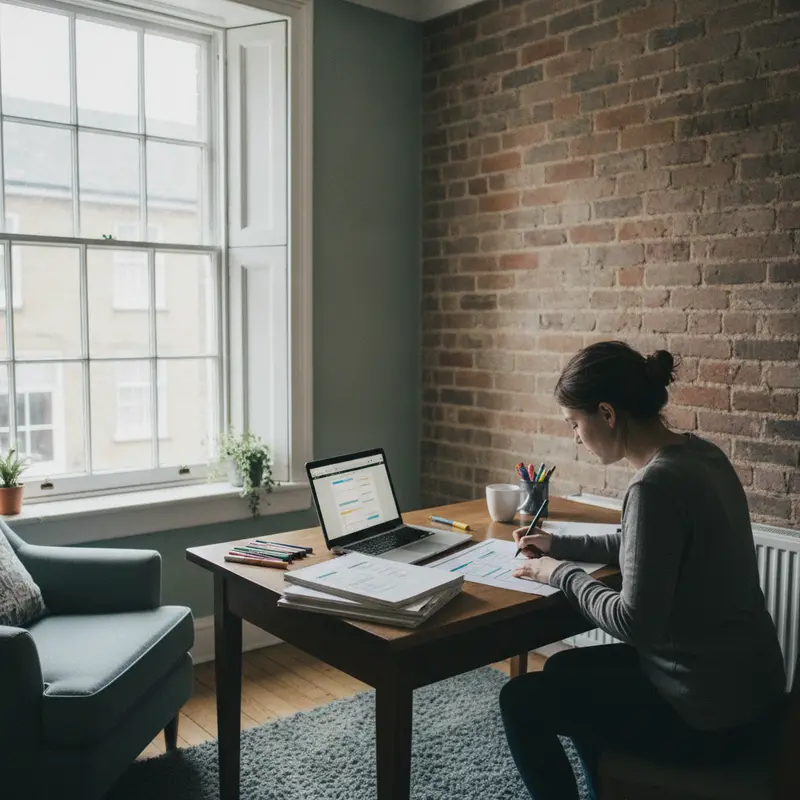
Design starts with the questions people ask
Many sites are designed from the homepage outwards: a template is chosen, the slider is filled, and only later does anyone ask where prices, opening times or the booking button should live. We work the other way round. Before any visual work we list the questions a customer has when they arrive, in the order they have them, and design pages that answer them in that order.
For a guest house near Micklegate Bar the list might be: is it near the station and the Minster, can I park, is there a room on my dates, what does it cost, is there step-free access. For a lab services firm at York Science Park it is more like: do they run the method I need, how quickly, who will I deal with, how do I send samples. The layout follows from those lists, which is why two York sites we design rarely look alike.
What is included, step by step
- Discovery session. Ninety minutes in person in York or on a video call. We agree goals, audiences and the three or four journeys that matter most, and look at the sites your customers compare you with.
- Sitemap and page plan. A one-page map of every page and what each must do, so you can see the shape of the site before anything is drawn.
- Content plan. For each page, the headings, key messages and what evidence or photos it needs. If we are writing the copy, this is where interviews happen.
- Wireframes. Plain grey layouts of the key templates at phone and desktop sizes. Cheap to change, and they keep the discussion on structure rather than colour.
- Visual design. Full designs for the home page and two or three core templates, using your brand or a simple identity we set out with you.
- Design system. Type, colour, buttons, forms, spacing and image rules written down, so pages added after launch stay consistent.
- Build hand-off. We build it ourselves (see development), so nothing is lost between designer and developer.
How long it takes
| Type of site | Typical scope | Typical timeline |
|---|---|---|
| Small brochure site | 5 to 10 pages, contact form | 4 to 6 weeks |
| Larger service or organisation site | 15 to 40 pages, several templates, news or case studies | 8 to 12 weeks |
| Site with booking, shop or integrations | As above plus third-party systems | 10 to 16 weeks |
The thing that most often stretches a timeline is content: words and photos arriving late. We set dates for both at the start and can write the copy for you if that is the bottleneck.
What it costs, and what drives the cost
We quote a fixed price after the discovery session. Rather than publish a rate card that would not fit most projects, here is what moves the number:
- Number of distinct templates, not number of pages. Ten service pages on one template cost far less than ten different layouts.
- Who writes the copy. Writing from scratch, with interviews, is a significant part of a project.
- Photography. Real photos of your premises and team are worth paying for; we can brief a local photographer.
- Functionality. Booking engines, shops, member areas and integrations add design and build time.
- Brand work. If there is no usable logo or palette yet, that comes first.
As a fair guide to the UK market, a small, well-made bespoke brochure site from an independent studio usually costs in the low thousands of pounds; larger and more functional sites cost more. We will tell you plainly if a simpler, cheaper route would serve you as well.
Common mistakes we help clients avoid
- Designing for the desktop screen in the office when most visitors arrive on a phone, often on a weak signal in a stone-walled street.
- Hiding prices, hours or locations because they "change too often". Visitors leave when they cannot find them.
- Choosing stock images of generic cathedrals and handshakes over honest photos of the actual business.
- Large sliders and autoplaying video that push the useful content down and slow the page.
- Low-contrast grey text and tiny buttons that fail basic accessibility checks.
- Launching without a plan for who updates the site, so it is out of date within months.
Built for phones first, accessible by default
We design the small screen first and keep calls to action within reach of a thumb. Readable contrast, proper heading order, labelled forms and keyboard-friendly navigation are part of the design rather than a later fix; we work to WCAG 2.2 AA. It is the right thing to do, it is increasingly a requirement in public-sector and university supply chains, and it tends to help search engines understand the page too.
How we measure whether it worked
Before launch we agree two or three measures that matter to your business, such as enquiry form submissions, direct booking clicks, calls from the site, or sign-ups. We set up privacy-friendly analytics to track them and compare the first three months after launch with the same period before, alongside Search Console data for search visibility. You get a short written review at the three-month mark with what changed and what we would adjust.
Questions
How long does a new website take?
A small brochure site usually takes four to six weeks from first meeting to launch. Larger sites with booking, shop or integration work take longer, and we give you a dated plan at the start.
Do I need to supply the words?
No. You can, and we will edit them, or we can write them after interviewing you. Copywriting is quoted separately so you can choose.
Will I be able to update it myself?
Yes. We hand over a site you can edit, with a short recorded walkthrough of the tasks you will actually do, such as adding news or changing prices.
Can you work with our existing brand?
Yes. We design within your logo, colours and fonts, and only suggest changes where something will not work on screen, such as a colour with poor contrast.
Do we have to meet in person?
No, but we are happy to. Many clients like a first meeting in York and then work by video call and email.