Websites for York's rail supply chain: what buyers look for
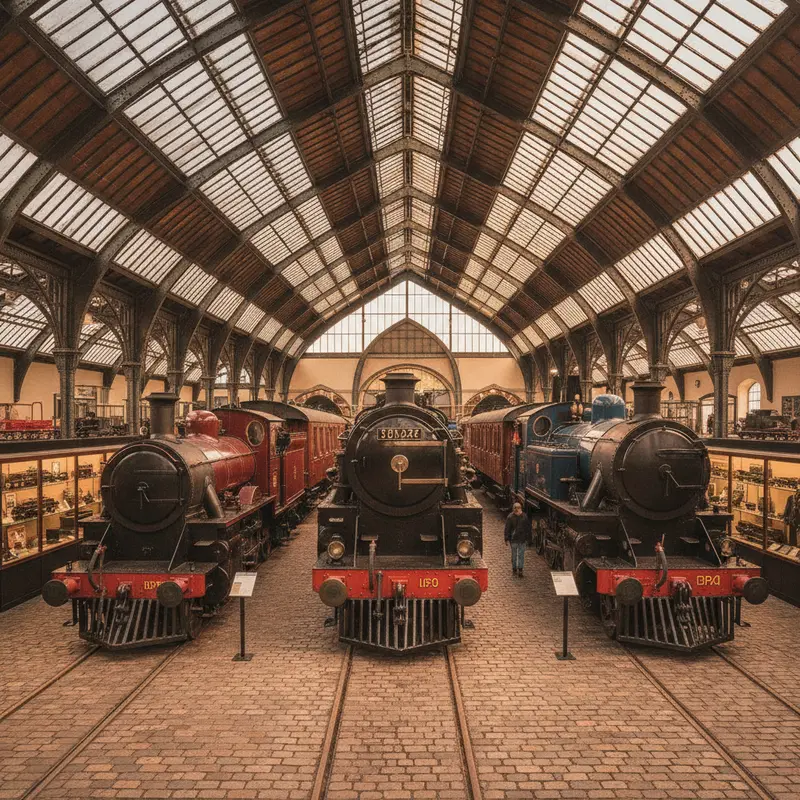
York's link with the railway runs deep. It grew into a major railway centre in the nineteenth century, it is home to the National Railway Museum, opened in 1975 in a former engine shed beside the station, and it remains a working railway city. Network Rail's York Rail Operating Centre, opened in 2014 and described by Network Rail as its biggest railway control centre, controls signalling on the East Coast route. Around that sits a network of engineering firms, consultancies, training providers, software developers and specialist suppliers, many of them small businesses.
For these firms, a website is rarely the thing that wins a contract. But it is very often the thing that gets you onto a shortlist, or quietly takes you off one. Procurement teams and engineers check websites before calls, during supplier searches and while scoring tenders. This guide covers what they look for.
Who reads a rail supplier's website
Several different people may read your site during a buying process:
- Engineers and project managers looking for a firm that can do a specific job, often under time pressure.
- Procurement and supply chain teams checking that you meet basic requirements before inviting you to bid.
- Tier 1 contractors looking for subcontractors with particular capabilities or regional coverage.
- Candidates, because skills shortages in rail are real and your site is part of how you recruit.
Each needs to find what they want quickly, and none of them wants marketing language.
Lead with capability, specifically
The most common weakness on engineering websites is vagueness. "We deliver innovative engineering solutions across the rail sector" tells a buyer nothing. What they need is the specific work you do: signalling design, track geometry surveys, OLE maintenance support, rolling stock refurbishment, asset data management, safety-critical software verification. Give each main capability its own page, with what it covers, the kind of projects you do, and the standards and processes you work to.
Use the terms your buyers use. Rail has its own vocabulary, and a buyer searching for a particular kind of service will use that vocabulary in the search box. Pages that use it clearly will be found and will read as credible.
Make the qualifying information easy to find
Procurement teams often have a checklist. They want to see whether you hold the registrations, accreditations and certifications the work requires, what your health and safety arrangements are, and whether you have relevant insurance and quality systems. List the ones you genuinely hold on a single, easy-to-find page, and keep it current. If a buyer has to email to ask, some will not bother.
Be careful to list only what you actually hold and to describe it accurately. Buyers check, and a mistake here does more damage than a short list.
Show the work, within the rules
Case studies are powerful in engineering, but rail projects often come with confidentiality restrictions and client approval processes. You can still describe work usefully without naming clients or sharing restricted details: the type of asset, the problem, the constraints (possession windows, live railway, heritage structures), what you did and the kind of outcome. Photos of your own team on site, with approval, are worth far more than stock images of trains.
Make it clear where you work
Regional coverage matters to contractors building supply chains. Say plainly which regions or routes you cover and where your teams are based. If you are a York firm working across the north, say so. If you mobilise nationally, say that too.
Don't neglect recruitment
Many rail firms say their biggest constraint is people, not work. A careers section that describes the actual roles, training and progression, what a typical week looks like, and how to apply can make a real difference. Mention any apprenticeship or graduate routes clearly. Candidates from the wider York area, including those coming out of college and university courses, will look you up.
Technical basics
Speed and reliability. Engineers often check sites on a phone on site or in a van. Keep pages light and fast.
Downloadable documents. Capability statements, policies and brochures in PDF form are often requested. Keep them up to date and link them from the relevant pages, but make sure the key information is also on the web page itself, where search engines can read it.
Security. A neglected site with out-of-date software can be a red flag for buyers who take cyber security seriously, which in rail many do. Keep it updated and use HTTPS.
Accessibility. Public sector and regulated buyers increasingly expect accessible websites. Building to WCAG 2.2 AA is sensible.
What a capability page should contain
| Section | What to write | Example |
|---|---|---|
| Summary | One sentence on the service and who buys it | "Topographic and track geometry surveys for renewals and enhancement schemes." |
| Scope | What is included, in buyers' terms | Survey types, deliverable formats, typical timescales |
| How you work | Process and constraints you plan around | Possession planning, competence management, safety briefings |
| Standards | Only the standards and accreditations you actually hold | Listed with a link to your accreditations page |
| Example work | Anonymised project notes agreed with clients | "A station canopy survey carried out over night possessions" |
| Contact | A named route for that service or for tenders | A short form with a field for tender reference |
Mistakes that cost shortlists
- Listing every sector you could conceivably work in, so the rail work disappears among them.
- Accreditation logos with no explanation and no date, which buyers cannot check.
- Out-of-date policies, such as a safety statement signed by someone who has left.
- Project photos that clearly show a client's assets or people without permission.
- A careers page that says only "we are always looking for talented people".
Keeping it current
A rail supplier's site dates quickly. Accreditations are renewed, key people move on, frameworks change and policies are reissued. Put a simple quarterly review in the diary: check every accreditation and its expiry, re-read the capability pages against the work you are actually winning, refresh the project notes with anything newly approved for publication, and confirm the tender contact still reaches someone. Fifteen minutes four times a year keeps the site trustworthy, and buyers notice when the most recent item on a supplier's news page is several years old.
A short example
Consider a small survey and design consultancy based near the station. Its old site said it delivered "end-to-end solutions across transport and infrastructure". Rebuilt around five capability pages, an accreditations page and a set of anonymised project notes, it gives a buyer the answer to "can they do this, and are they qualified?" in under a minute. That is the realistic aim: not to win the contract from the website, but to make sure the website never loses it.
We describe a similar engagement on our case studies page. Firms supplying the energy and industrial sector south of the city will find more on our Selby page, and our website design and accessibility audit services cover the build and the compliance side.
A structure that works
- Home: who you are, what you do, sectors and regions, and a route to each capability.
- One page per capability.
- Projects or example work.
- Quality, safety and accreditations.
- About and team.
- Careers.
- Contact, with a named route for tenders.
None of this requires a large site. A tight, specific, well-maintained site of a dozen pages will serve most rail suppliers better than a large one full of general claims. If you would like help putting one together, we are based in York and understand the sector's vocabulary.